.png&w=3840&q=75)



.png&w=3840&q=75)

.png&w=3840&q=75)




Off-Plan vs Ready Properties in the UAE: How to Choose as an Investor
If you are investing in the UAE for the first time, the off-plan vs ready question shows up fast. One option is a glossy new launch with a payment plan and a handover date. The other is a finished home you can walk through today—sometimes even with a tenant already in place. Both paths can work in Dubai, Abu Dhabi, and Sharjah, but they reward different timelines, risk tolerance, and portfolio goals.
Market Overview
The UAE remains one of the region’s most active residential investment markets, and the buyer mix is still shaped by expat demand, lifestyle migration, and the preference for well-managed communities. Dubai typically offers the deepest resale liquidity and a wide range of freehold inventory across budgets. Abu Dhabi has leaned on master-planned investment zones and high-quality new supply, with many projects competing through community design and flexible payment terms. Sharjah has attracted more investor attention over the last few years, and 2026 initiatives aimed at strengthening transparency (including escrow-style systems) are part of a broader credibility push.
When you underwrite returns, market averages suggest gross rental yields for UAE apartments often sit in the mid-single digits to high-single digits, depending on entry price, bedroom type, and tenant demand. Prime lifestyle assets can run lower because the capital value is higher. Treat any ROI discussion as an expected range, not a guarantee.
Main Section
What “off-plan” and “ready” really mean in the UAE
Off-plan means you buy from a developer before completion, usually under a Sale & Purchase Agreement (SPA). Payments are staged—either on a timeline, on construction milestones, or both. Ready means the property is completed and can be transferred to your name now (or quickly), allowing you to take possession, rent it, renovate it, or resell with less construction and delivery risk.
Where off-plan can make sense
Off-plan can suit investors who care about locking an entry price earlier, pacing cash outlay through a payment plan, and aiming for capital appreciation over a multi-year horizon. In real-world UAE investing, off-plan tends to be strongest when (a) the developer has a credible delivery history, (b) the project registration is clear, and (c) the handover window is realistic. Budget for the “post-handover gap” too: snagging, furnishing, utilities deposits, and leasing setup can add up, and they arrive close together when the unit is first delivered.
Where ready property can make sense
Ready property usually fits investors who prioritize visibility and cash flow. You can inspect the building quality, estimate service charges more accurately, check comparable rents, and often start generating income sooner. Ready units also reduce timeline risk—the risk that your capital sits idle due to delays, and that rents look different by the time handover happens.
| Area | Average Price | Expected ROI |
|---|---|---|
| Dubai Marina | AED 1.68M (1BR avg) | 5.5–6.8% (gross) |
| Downtown Dubai | AED 2.38M (1BR avg) | 5.0–6.2% (gross) |
| Jumeirah Village Circle (JVC) | AED 1.05M (1BR avg) | 6.8–8.5% (gross) |
| Al Reem Island (Abu Dhabi) | AED 1.14M (1BR avg) | 6.5–8.2% (gross) |
| Masdar City (Abu Dhabi) | AED 0.85M (1BR avg) | 7.2–9.0% (gross) |
| Aljada (Sharjah) | AED 0.75M (1BR avg) | 5.5–7.0% (gross) |
Note: These figures are directional ranges based on recent public market reports and can shift with unit size, view, building quality, handover timing, and vacancy. Always re-check current rents and service charges at building level before you commit.
Cost Breakdown
In the UAE, “purchase price” is not the full number you underwrite. Plan for one-time government and administrative fees, plus ongoing operating costs. The exact cost stack differs by emirate and transaction type (cash vs mortgage, off-plan vs resale), and it can change over time.
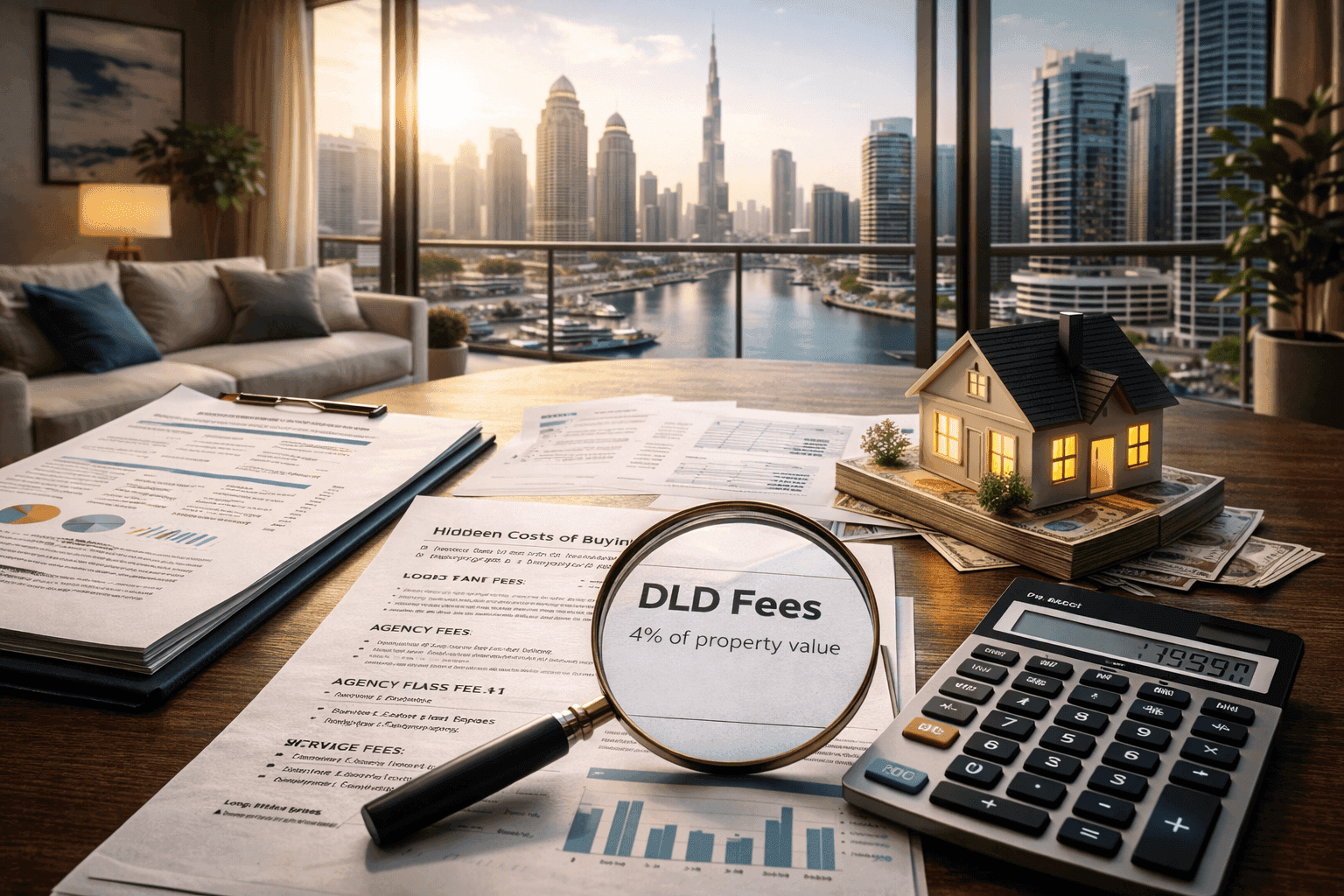
Dubai (common buyer cost items): A 4% transfer/registration fee applies to most sales transfers, plus trustee or service-partner fees and smaller fixed charges such as title deed and map fees. If you finance the purchase, budget for mortgage registration charges and bank-related costs. For holding costs, annual service charges can materially change your net yield—especially in amenity-heavy towers.
Abu Dhabi (common buyer cost items): In development zones, government registration fees are commonly calculated as a percentage of the contract value, with additional e-services charges. Mortgage registration is typically a separate percentage fee if applicable. For landlords, keep an eye on tenant affordability and “all-in” housing costs, as municipality-related charges are often reflected in utilities billing.
Sharjah (common buyer cost items): Registration and administrative fees vary by property type and timing. In some periods, government initiatives may reduce registration fees, which can improve the effective entry cost. Underwrite cautiously and confirm the latest schedule as part of your transaction checklist.
Risks & Considerations
- Market cycles: Prices and rents move in waves. Off-plan buyers face higher exit-timing risk if handover lands during a softer phase.
- Developer reliability: Track record matters. Look for evidence of past handovers, construction quality, after-sales service, and transparent escrow and registration steps.
- Liquidity: Ready units in established communities can be easier to resell, but not always. For off-plan, assignment rules, resale fees, and project-stage restrictions can affect your exit options.
- Service charges and operational drag: High service charges can turn a strong headline yield into an average net return, particularly for smaller units.
- Handover and snagging: Budget time and money for snagging, minor repairs, and leasing setup. Delayed leasing is a real cost, even if it does not show up on a brochure.
Investment Strategy
Budget under AED 1M: Focus on cash-flow discipline. Many investors in this bracket prefer ready or near-handover units in high-demand, mid-market communities where vacancy risk is easier to control. If you choose off-plan, prioritize late-stage construction and keep rent assumptions conservative.
AED 1M to AED 3M: This is where a blended approach often works. Investors may pair one ready unit for near-term income with one off-plan unit for medium-term upside, so the portfolio is not betting on a single timeline.
Above AED 3M (including high-net-worth profiles): Decide what you are buying: lifestyle scarcity (views, branding, waterfront access) or pure yield. Prime assets can be excellent long-term holds, but expected yields may be lower and liquidity can be more sensitive to global sentiment. A conservative structure is to balance one prime asset with one income-first unit.
Additional Insights
If you want the comparison to be investor-grade, run two numbers: gross yield and net yield. Gross yield is straightforward (annual rent ÷ purchase price). Net yield is where reality lives: service charges, maintenance, vacancy, insurance, and leasing costs can reduce returns meaningfully. Also define your exit plan early. Off-plan investors often aim to sell close to handover or hold through the first leasing cycle until performance is stable. Ready-property investors often plan around immediate leasing, building-level improvements, and longer holding periods where compounding rent growth matters more than buying at launch.
Disclaimer: Real estate investments are subject to market conditions. Returns are not guaranteed and may vary. This content is for general information only and does not constitute financial or legal advice. Regulations and fees may change.